
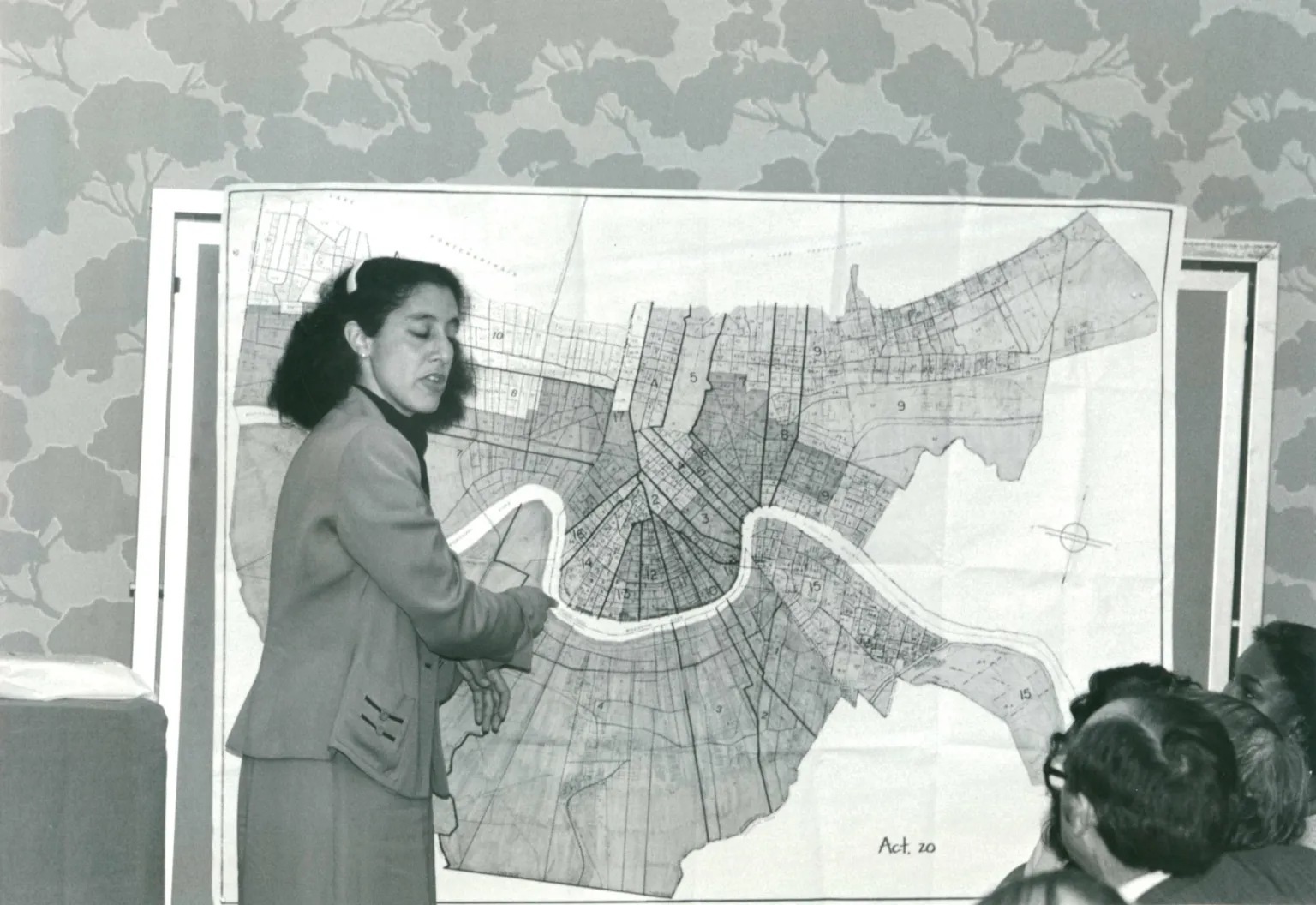
Lani Guinier, for whom this project is named, was a civil rights lawyer with the US Department of Justice and the NAACP Legal Defense Fund and was the first Black woman to be tenured at Harvard Law School. Almost 30 years ago, Prof. Guinier argued that the design of the American electoral systems, specifically their focus on single-member electoral districts determined by a plurality winner, undermines an increasingly multiracial democracy. She advocated for alternative voting systems that do not present zero-sum tradeoffs, particularly for racial minorities.
Unfortunately, Prof. Guinier’s work was misunderstood and vilified by the broader public, and even the civil rights community, of which she was a part, failed to greet her recommendations with enthusiasm. Given that the single-member district was the remedy that civil rights advocates relied on to address voting rights violations, voting rights advocates have been loath to abandon it.
With the US Supreme Court now poised to strike down single-member districts when drawn to provide representation to voters of color, democracy advocates are gradually coming to terms with what Prof. Guinier understood decades ago: single-member districts are bad for advanced multiracial, multicultural democracies. They exacerbate conflict, over-reward plurality winners, depend on the government to identify relevant identity groupings rather than allowing voters to do it themselves, and are not proportionally representative.
The Guinier Project combines democracy reform and a focus on racial equality. The Project aims to study, identify, and recommend alternatives to the single-member districting system that are good for democracy and that increase representation for all voters, particularly historically underrepresented voters of color. This work will lay the foundation for a new voting and civil rights consensus for the 21st century, replacing the 20th century consensus on single-member districts with alternative voting systems that will promote and sustain a diverse democracy and make democracy more responsive to persistent threats to representation within American democracy at all levels—local, state, and federal.
The goals of the Guinier Project include:
(1) To form and convene an interdisciplinary group of thought leaders, practitioners, and researchers that would otherwise not have the opportunity to work collaboratively over a sustained period of time in order to advance the knowledge of all constituent groups on this topic and advance reform efforts meant to protect American democracy.
(2) To provide resources for academics/researchers, practitioners (particularly legal and policy), community advocates and organizers, and funders that explains available real-world and scholarly data and theory on alternative voting systems in accessible terms and provides actionable ideas for reform and innovation to American democratic systems.
(3) To provide a platform for testing assumptions, theories, and hypotheses regarding the viability, appeal, and effects of alternative voting systems, particularly with respect to racial representation. The project aims to identify the baseline, make recommendations based on present and near future conditions, and identify areas ripe for research, investigation, and experimentation. In addition, the Project fosters and supports ongoing dialogue, collaboration, and research that deepens collective understanding of effective democratic system reforms and educates the public about viable alternatives to our current systems that better serve and reflect our democratic populace.
(4) To provide persuasive evidence and actionable ideas for re-imagining what democratic systems and representation looks like in the 21st century by moving beyond the old model that has increasingly failed to serve the aims of supporting and fostering a vibrant diverse democracy.
-
Collateral Consequences Speaker Series: September – December 2025
Collateral Consequences: Climate Change’s Impacts on Democracy Join us this fall for a seven-part virtual speaker series featuring one-hour discussions at the intersection of democracy and climate change. This series will feature an interdisciplinary array of perspectives, exploring how climate-related natural disasters, extreme weather, and migration patterns can and do affect how we think about…
-
A Primer on Electoral System Design
Thank you to the J. Sherman Studio team for their design work on the Primer.
-
Protected: Racial Equality After Callais – April 16 – 17, 2026
There is no excerpt because this is a protected post.
-
Glossary of Electoral System Design
From our Substack – a glossary of electoral system design terms.