
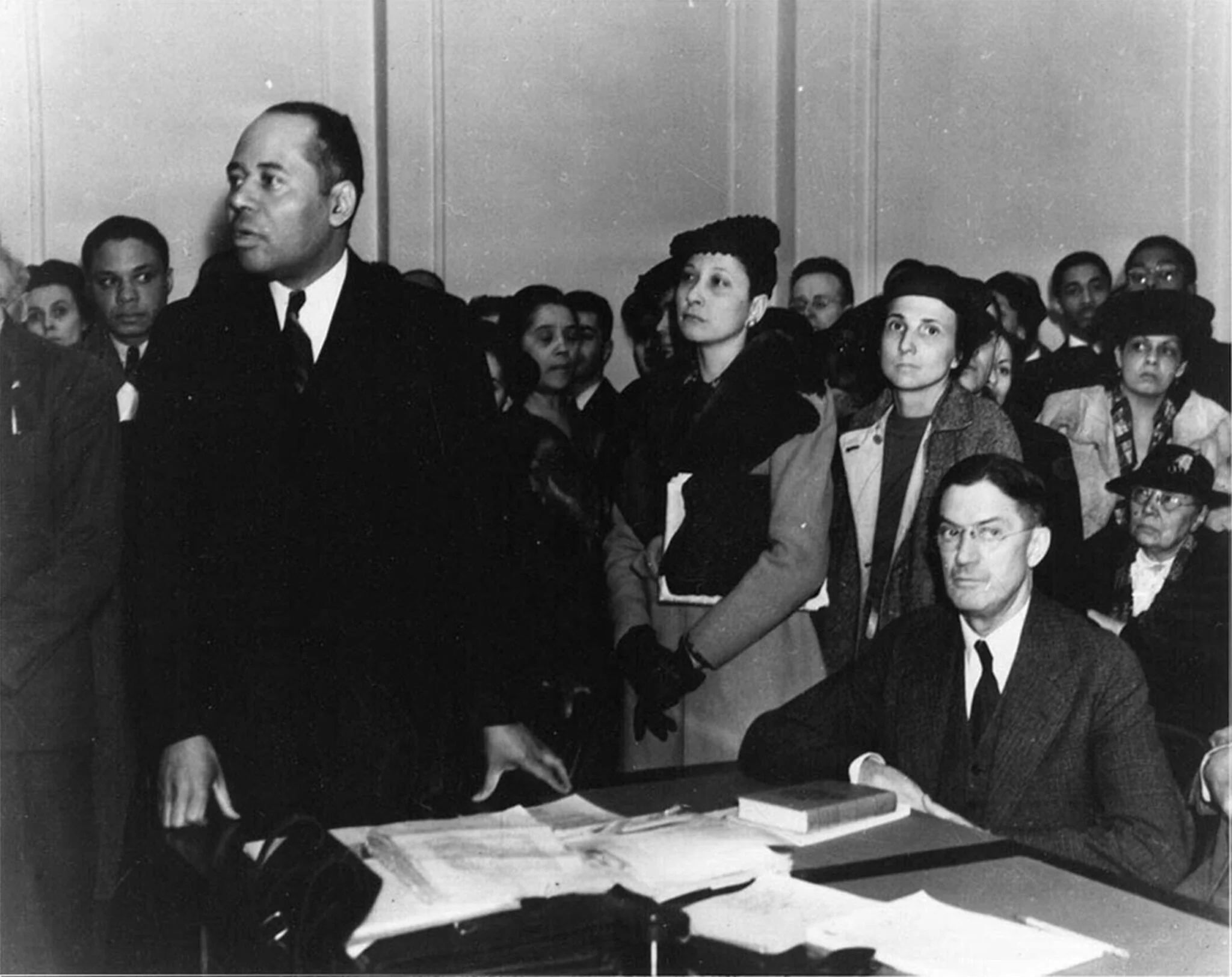
Charles Hamilton Houston, known as “The Man Who Killed Jim Crow,” was Harvard’s first Black SJD graduate in 1923, and he became the first Black student on the Harvard Law Review’s editorial board. He is best known for his legal work on desegregation, and is considered a less well known but critically important architect of civil rights lawyering. Houston is credited for engineering the multi-year legal strategy that ultimately led to the decision in Brown v. Board of Education that struck down the “separate but equal” doctrine. By facilitating a continuous dialogue between practitioners and scholars, he ensured that legal scholarship would resonate outside the academy and that new legal strategies would be immediately incorporated into the training and practice of law students and lawyers.
LEARN MORE

Read thoughts from former Houston Institute Faculty Director Tomiko Brown-Nagin on the legacy of Charles Hamilton Houston here.
Learn more from Harvard Law School’s Legacy of Charles Hamilton Houston event in 2019.
Harvard’s Legacy of Slavery Project has also shared more on Charles Hamilton Houston’s history at Harvard here.